Lignite Dryer: Reliable Lignite Drying Solutions From Tongding Machinery
What is Lignite Dryer?
A lignite dryer is an industrial device specifically designed to reduce the moisture content of lignite (a young coal type with high moisture content and low calorific value).
It typically employs a rotary drum structure, utilizing hot air in direct contact with the lignite. Through processes such as “low-temperature four-stage drying,” the moisture content of lignite can be significantly reduced from 30%-50% to below 13%.
After drying, the calorific value of lignite is significantly increased, making it easier to store and transport, thereby enhancing its utilization value as fuel or chemical raw material.
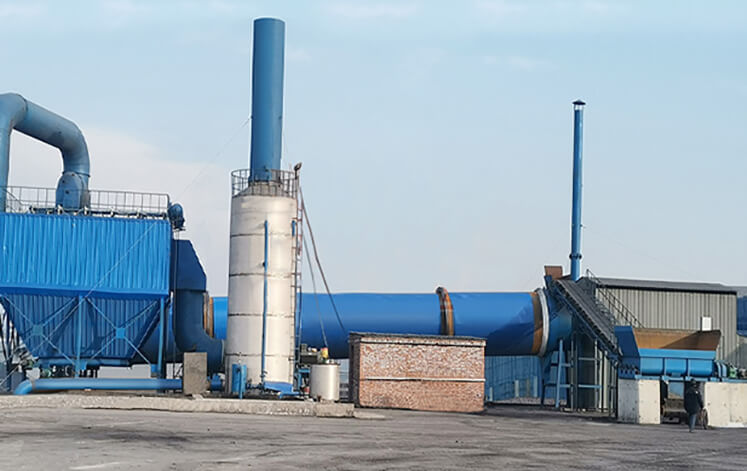
Advantages of Lignite Drying equipment
The advantages of lignite drying equipment are mainly reflected in four aspects: safety, efficiency, quality improvement, and environmental protection. It employs low-temperature or indirect drying technology, effectively preventing lignite from igniting and exploding due to its high volatile matter content. The equipment achieves high drying efficiency and low heat loss through enhanced heat exchange. After drying, the calorific value of the lignite is significantly increased, and it becomes hydrophobic and non-moisture-resistant, facilitating storage and transportation. Simultaneously, the fully enclosed negative pressure operation effectively controls dust pollution.
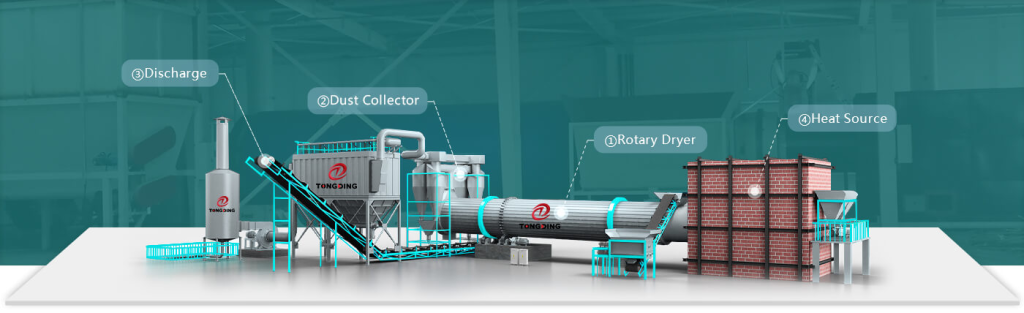
Applications of lignite drying machine
Lignite dryers have a wide range of applications, primarily focusing on the energy and resource utilization of the upgraded lignite.
In the energy sector, the calorific value of dried lignite is increased, allowing it to be directly used in thermal power generation and industrial boiler combustion, thus improving combustion efficiency. In the chemical industry, it serves as a crucial pretreatment step for subsequent gasification and liquefaction processes, providing qualified raw materials for the production of chemical products such as synthetic ammonia and methanol. Furthermore, its applications extend to non-energy sectors such as building materials, agriculture, and carbon materials.
Technical parameters of lignite dryer
| Model | Capacity | Initial Moisture | Final Moisture | Motor Power |
| φ2.5×22 | 5–35 T/H | 10–26% | 1% | 37 KW |
| φ3×20 | 30–40 T/H | 10–26% | 1% | 55KW |
| φ3.2×32 | 40–50 T/H | 10–26% | 1% | 90 KW |
| φ3.6×36 | 50–70 T/H | 10–26% | 1% | 110 KW |
| φ4×40 | 70–100 T/H | 10–26% | 1% | 160 KW |
How to Choose a Lignite Dryer?
The key to selecting a lignite dryer is matching the characteristics of the lignite to production needs.
First, consider the coal quality: high-moisture, high-viscosity lignite is best suited for rotary drum dryers with dispersing devices; finer-particle coals benefit more from fluidized bed or airflow dryers.
Second, consider scale and cost: large-scale projects can opt for high-capacity, highly automated rotary drum dryers, while indirect heating dryers are preferable for high-quality drying. Safety and environmental protection are also crucial; the equipment must include temperature control, explosion-proof features, and dust removal devices.
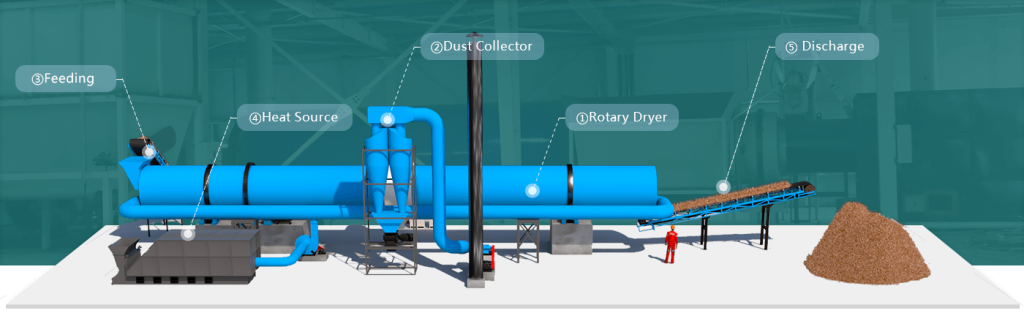
Tongding lignite dryer is your first choice
Tongding lignite dryer, with its robust capabilities, is your top choice for improving quality and efficiency. This equipment precisely addresses industry pain points such as the flammability and explosiveness of lignite during drying, high energy consumption, and inflated capacity claims. Its core advantages lie in its accurate capacity claims and genuinely low energy consumption, achieving savings of 10%-30%, with guaranteed capacity targets explicitly stated in the contract. The equipment utilizes wear-resistant steel, extending its service life by over 40%, and offers mature solutions for harsh working conditions in Northwest China, protected by 126 patents.