News
-
 2026-05-28
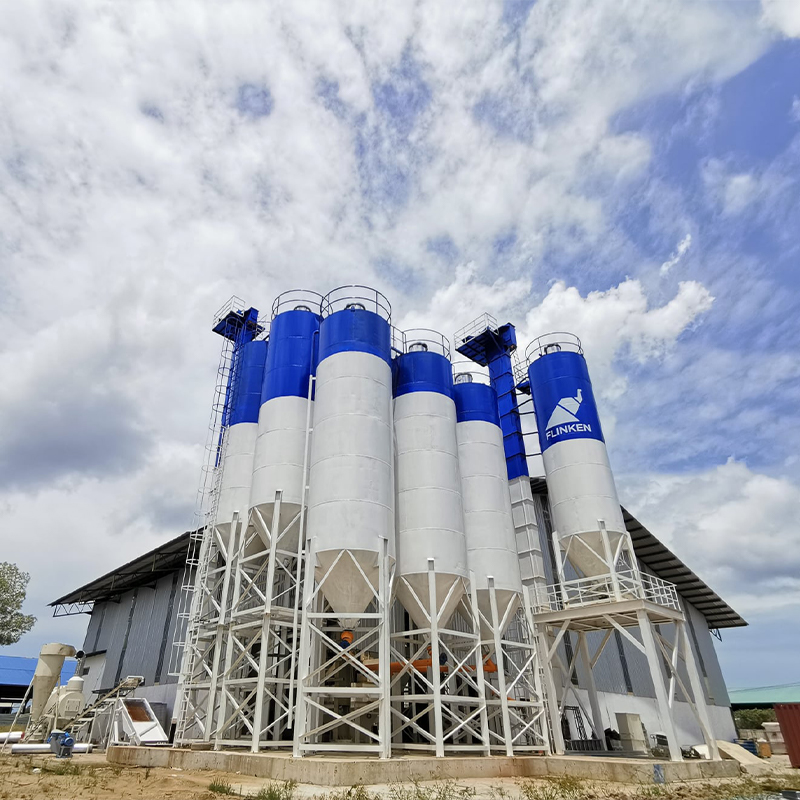
What is a Floor Mortar Plant?
The flooring mortar production line is a fully automated production system. Its manufacturing process encompasses automatic batching, mixing, and packaging operations, transforming raw materials—including sand, cement, fly ash, polymer additives, and fibers—into pre-mixed dry-powder flooring mortar. The entire production process is highly efficient and energy-saving. 二.What is the Capacity of Floor Mortar Plant? The standard capacity range for floor mortar production is typically 5–120 tons per hour (TPH). 5–15 TPH is suitable for small-scale enterprises. 20–50 TPH is suitable for medium-scale enterprises. 60–120 TPH is suitable for large-scale enterprises. We can also provide customized solutions and design proposals tailored to our clients’ specific requirements. 三.What are Core Components of a Floor Mortar Line? Raw Material Storage & Drying System: Large-scale steel silos (50–300 m³) and a three-pass rotary drum dryer remove moisture from raw sand (reducing moisture content to <0.5%), ensuring stable mortar quality. A vibrating screen classifies the sand into uniform particle sizes (0–5 mm) to achieve optimal performance. Precise Weighing System:Computer-controlled weighing for sand, cement, fillers, and additives with ±0.5% tolerance—ensures batch-to-batch consistency. Twin-Shaft Paddle Mixing System: The heart of the plant—a twin-shaft paddle mixer (also known as a double-shaft paddle mixer)—delivers homogeneous mixing with: Finished Product Storage...
-
 2026-05-27
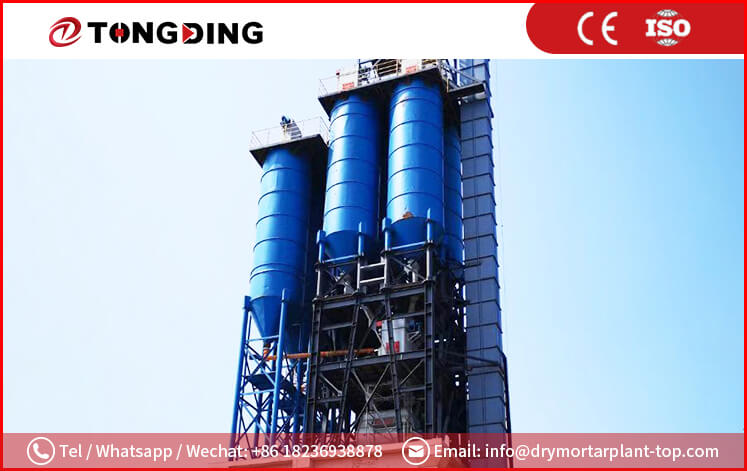
Dry Mortar production line ——Tongding Machinery Professional Manufacturer
Tongding Machinery’s fully automated dry-mix mortar batching plant features a twin-shaft gravity-free mixer as its core component, ensuring exceptional mixing uniformity. It is equipped with intelligent PLC controls for precise metering. Boasting a tiered structural design, the plant facilitates easy installation and incorporates effective dust removal systems for environmental protection. As global infrastructure projects increasingly demand higher levels of efficiency and quality, Tongding has witnessed a significant surge in international orders for its advanced dry-mix mortar batching plant solutions. What is the workflow of a dry-mix mortar production line? Raw Material Storage: Sand, cement, fly ash, additives, and other materials are stored separately in silos. Batching & Weighing: Materials are precisely weighed using electronic scales according to the specified formula. Mixing: A twin-shaft gravity-free mixer performs high-speed, uniform blending. Finished Product Storage: The mixed dry-mix mortar is conveyed into the finished product silo. Packaging / Bulk Loading: Products are either automatically packaged into bags or loaded directly onto trucks for transport. Tongding Machinery: Real-World Case Studies of Dry-Mix Mortar Production Line Dominican: 300,000-Ton Annual Capacity Dry-Mix Mortar Plant (Tower-Type) Scale: Tower-type layout; hourly output of 20–25 tons; annual output of 300,000 tons Products: General dry-mix mortar, tile adhesive, thermal insulation...
-
 2026-05-22
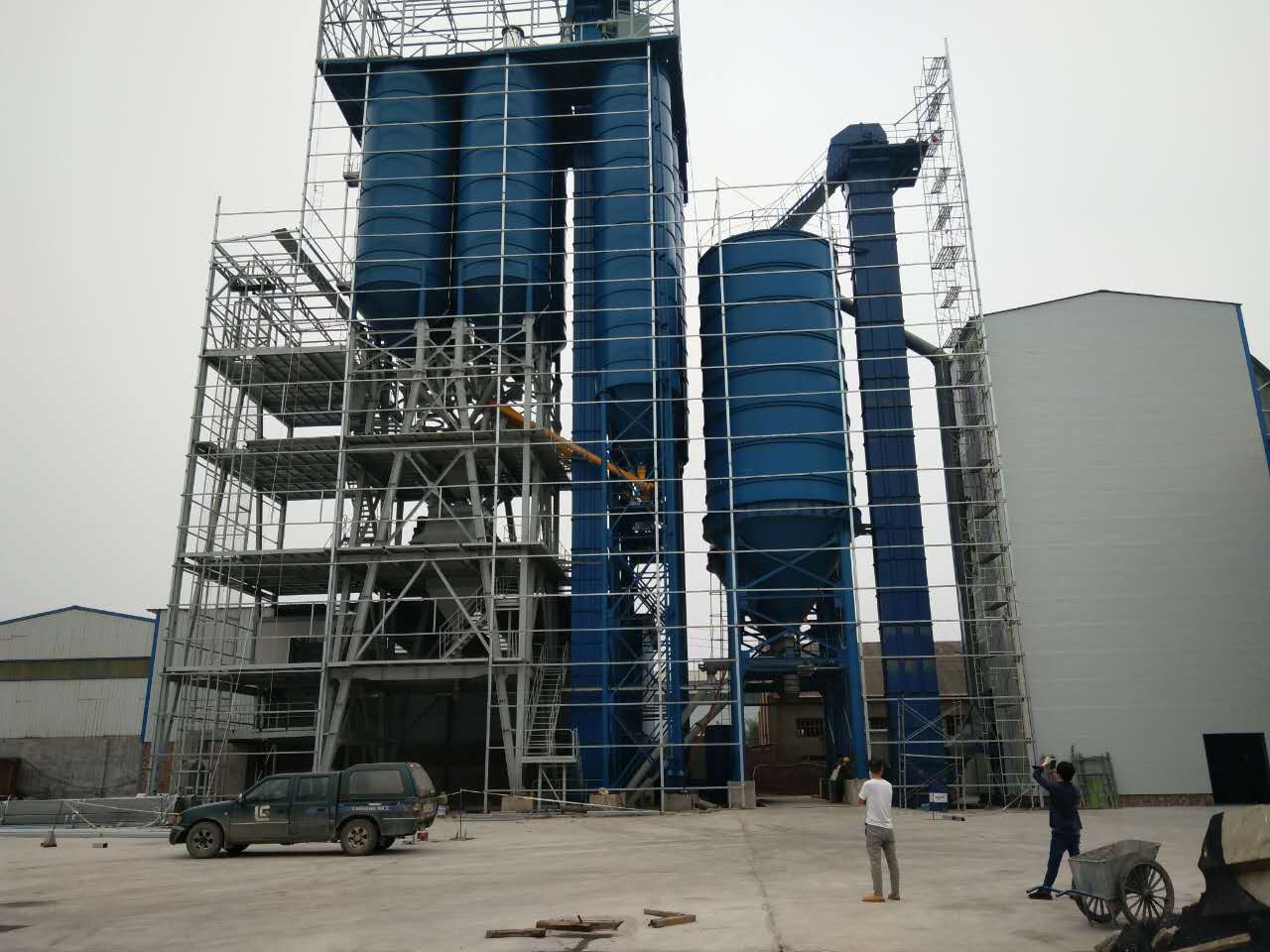
Dry Mortar Mixing Plant—— Professional Manufacturer
一.What Is a Dry Mortar Mixing Plant? A complete mortar mixing plant consists of the following seven components: 1.Raw Material Storage System 2.Weighing and Batching System 3.Main Mixer 4.Lifting and Conveying System 5.Finished Product Silo 6.Packaging System 7.Dust Removal System, Control System 二.Why Choose a Professional Dry Mortar Mixing Plant Manufacturer? 1.Precise Formulation: Features a high-precision metering system that ensures stable mortar quality and eliminates the need for rework. 2.Durable Equipment: The core host, mixing arms, and liner plates are constructed from robust materials, ensuring exceptional durability and resistance to failure during long-term operation. 3.Mature Process: The workflow is rationally designed, integrating conveying, mixing, dust removal, and packaging into a seamless, highly efficient operation. 4.Reliable After-Sales Support: Backed by an experienced team dedicated to installation, commissioning, and maintenance, ensuring that any issues are resolved quickly and efficiently. 5.Eco-Friendly & Compliant: Features effective dust removal and sealing...
-
 2026-05-21
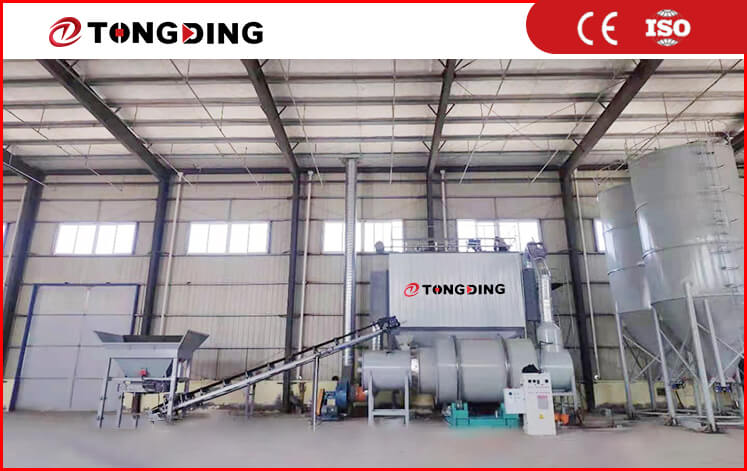
The capacity of sand drying system——Tongding Machinery
Sand gravel drying production line is a comprehensive set of industrial machinery specifically engineered for the continuous dewatering and drying of wet sand. This production line is widely utilized in the production of construction materials and dry-mix mortars, at concrete mixing plants, in water conservancy projects, and at sand and gravel storage yards. The entire line is characterized by high levels of automation, substantial processing capacity, and controllable energy consumption, enabling the single-pass drying of wet sand with high moisture content to meet predetermined moisture level standards. What is capacity of sand drying system? .3–5 t/h Small Mixing Plants, Small Sand Yards .8–12 t/h Small-to-Medium Mortar Plants, Sand Yards .15–20 t/h Medium-sized Sand Yards, Standard Workhorse Model .25–30 t/h Large Sand Washing Plants, Commercial Concrete Plants .40–50 t/h Large Sand & Aggregate Bases, Export Sand Production How to Correctly Select the Capacity of a Sand Drying Line? 1. First, determine the required daily output of dry sand (in tons). 2. Divide the total daily dry sand requirement by the number of daily operating hours (typically 8 to 10 hours). 3. Dryer Output Capacity = (Daily Dry Sand Requirement in Tons ÷ Operating Hours) × 1.3 Then, multiply this result by...
-
 2026-05-20
What fuel does sand drying line use?
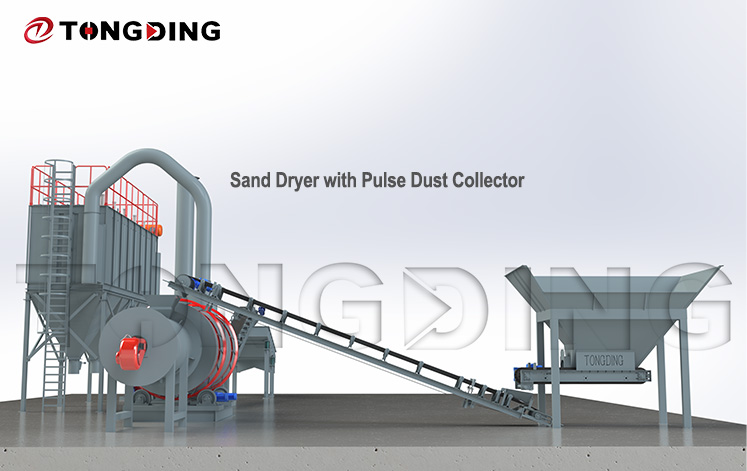
What Fuel Does Sand Drying Line Use? Fuel plays a crucial role in the operation of dryers. The fuels commonly used in sand dryers fall into three major categories: cost-effective options, clean and eco-friendly options, and industrial waste heat sources. The specific classifications are detailed below. Common Fuels Used in Sand Drying Line 1.Natural Gas Burner (LPG, etc.): Pros: Clean and smokeless, easy temperature control, virtually dust-free. Cons: High fuel costs; requires connection to piping or a gas storage tank. 2.Fuel Burners (Diesel, Heavy Oil, etc.): Pros: Rapid ignition, precise temperature control; suitable for mobile or small-scale Cons: Highest operating costs. 3.Coal stove: Advantages: High calorific value and lowest cost; suitable for regions with high production volumes and moderate environmental requirements. Disadvantages: Generates significant smoke and dust, necessitating the installation of auxiliary dust removal and desulfurization equipment. 4.Biomass Pellet Burner: Advantages: Low cost; classified as a renewable energy source; and in many regions, considered a form of clean energy. Disadvantages: Slightly lower calorific value; requires a stable supply. How to Choose the Right Fuel? 1.If you have a high production volume and are seeking cost-effective operation: Use coal or biomass pellets. 2.If your factory is located in a suburban area...
-
 2026-05-19
Sand drying line manufacture-Tongding Sand Drying System
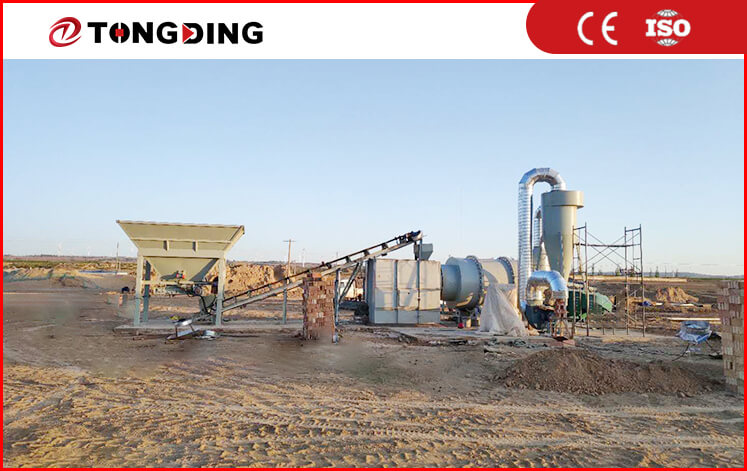
What Is a Sand Drying System? A standard sand drying line comprises the following stages: feeding, drying, screening, dust removal, and conveying/storage; the core component of this system is the triple-pass rotary dryer. What machines are used in a sand drying line? A complete sand production line comprises the following machines: 1.Wet Sand Bin (Buffer Hopper): Fed by a wheel loader; stores wet sand. 2.Belt Feeder / Variable Frequency Feeder: Uniform and Quantitative Feeding, Anti-Clogging 3.Belt Conveyor: Conveys wet sand to the feed end of the dryer. 4.Three-Pass Dryer (Triple-Drum): The mainstream choice, featuring high thermal efficiency and a discharge moisture content of ≤0.5%–1%. 5.Heat Source Unit: Burner (Natural Gas / Diesel / Biomass / Pulverized Coal), Combustion Chamber. 6.Pulse Jet Baghouse: The Workhorse—Ensuring Compliant Dust Emissions 7.Cyclone Dust Collector (Primary): Separates large particles first, thereby reducing the load on the filter bags. 8.Induced Draft Fan (Centrifugal Fan): Generates negative pressure suction to create airflow circulation. 9.Vibrating Screen (Circular / Octagonal): Classified by Particle Size (e.g., 0.63 / 1.2 / 2.0 mm) 10.Bucket Elevator (NE Type): Lifts dry sand to the finished product bin / silo. 11.Finished Belt Conveyor: Dry Sand Conveying, Truck Loading / Silo Filling. 12.Dry Sand Storage...